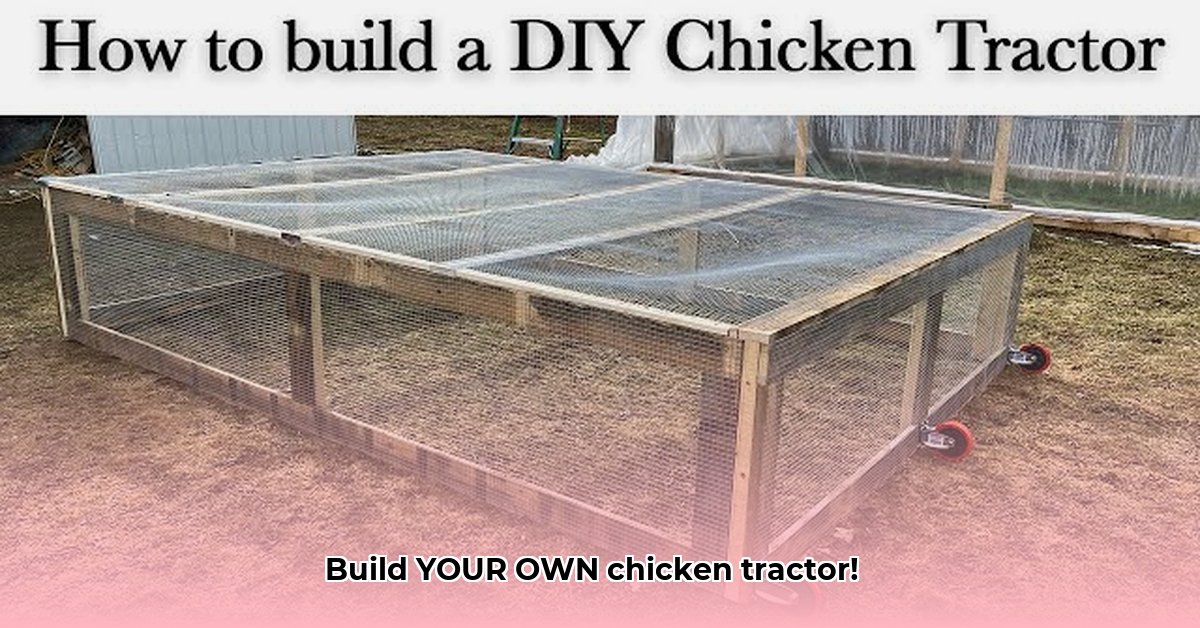
Building your own chicken tractor, inspired by Joel Salatin's innovative farming techniques, offers a rewarding way to raise healthy, happy chickens while enriching your soil and enjoying fresh eggs. This guide provides detailed plans for two designs: a smaller model for backyard flocks and a larger one for more extensive operations. Forget searching for elusive PDFs – let's build! For even more detailed plans, check out these chicken tractor plans.
Design 1: The Backyard Chicken Tractor (25-30 Hens)
This design is ideal for beginners, offering simplicity and ease of mobility.
1. Materials List:
- 2x4s (treated lumber recommended for durability)
- Plywood (for the floor)
- Chicken wire (heavy-duty, with overlapping edges to prevent predator access)
- Hinges (for doors)
- Strong latches
- Wheels (robust enough to handle the weight of the coop and chickens)
- Roosting bars
- Nesting boxes
- Wire staples or clips
2. Building the Frame:
Construct a sturdy rectangular frame using the 2x4s. Ensure it's level and square. Securely attach the plywood floor to the frame.
3. Walls and Roof Construction:
Attach the chicken wire to the frame, creating walls and a roof. Overlap wire edges and secure with staples or clips. Consider reinforcing vulnerable areas with extra wire or metal supports to deter predators. Adding a tarp over the chicken wire provides extra weather protection.
4. Interior Features:
Install roosting bars and nesting boxes. Ensure roosting bars are positioned for comfortable perching and allow easy access for egg collection.
5. Wheel Installation:
Securely attach the wheels to the frame's base, ensuring they’re sturdy enough for easy movement.
6. Dimensions (Approximate): 4ft x 8ft x 4ft (adjust based on your flock size and available space).
Design 2: The Larger-Scale Chicken Tractor (70-100 Hens)
This design requires more advanced building skills and potentially assistance. Increased size necessitates a sturdier structure and careful planning for mobility.
1. Materials List:
- Significantly more lumber compared to the smaller design (consider using stronger, more durable materials)
- Heavy-duty chicken wire or welded wire mesh
- Stronger hinges and latches
- Heavy-duty wheels or a trailer chassis
- Additional support beams and bracing
- Roosting bars and nesting boxes (in proportion to flock size)
2. Frame and Enclosure Construction:
Build a robust frame with added structural support. Consider dividing the tractor into manageable sections for easier movement. Use heavier-duty materials throughout.
3. Ventilation and Weather Protection:
Implement better ventilation, perhaps incorporating fans or additional openings. Use a robust roofing material that can withstand various weather conditions.
4. Wheel/Mobility System:
Use heavy-duty wheels or consider using an old trailer chassis for ease of movement. A hitch system might be beneficial for larger tractors.
5. Dimensions (Approximate): 8ft x 16ft x 5ft (adjust based on flock size, though consider sectioning to simplify movement). Remember, a bigger mobile coop might require a motorized vehicle for relocation.
Beyond Construction: Essential Considerations
Regardless of size, successful pastured poultry requires more than just the tractor.
1. Pasture Management: Rotate pastures regularly to prevent overgrazing and replenish soil nutrients. This is crucial, especially with larger flocks, which mandate a more structured pasture rotation program.
2. Predator Control: Electric netting or other predator deterrents are essential. The larger the flock, the more robust the protection needs to be. Thoroughly assess local predators and adapt accordingly.
3. Biosecurity: Maintain a clean environment to prevent disease. Regularly clean and disinfect the tractor and maintain fresh bedding.
4. Regulatory Compliance: Check local ordinances regarding poultry raising before you begin. Larger flocks are more likely to require permits.
5. Flock Management: Regular health checks, proper feeding, and fresh water are crucial. Monitor for any signs of illness and consult with a veterinarian as needed.
Choosing the Right Design: The best design depends on your flock size, space, budget, and building skills. Plan carefully, focusing on practicality and sustainability. The payoff—fresh eggs and delicious, pasture-raised chicken—is worth the effort.